Tuesday, 20 September 2016

Know Your Wetland Classes, Part 4: Marvelous Marshes

Did you know that there are 5 classes of wetland in Canada? Learn to recognize them and get acquainted with the wetlands near you. You can learn about all 5 classes of wetland in greater detail by reading the Canadian Wetland Classification System. This post is Part 4 of a 5 Part series entitled Know Your Wetland Classes.

The theme this week is marshes. You can find Part 1 of the series (Fens) here, Part 2 (Bogs) here, and Part 3 (Swamps) here. 
This freshwater marsh in Corner Brook, NL is frequently used by Ducks Unlimited 
for their Project Webfoot field trips. It is part of the Corner Brook Stream Trail 
and is a perfect spot for walking and birding.

What is a Marsh?

A marsh typically has surface water for most (if not all) of the year, and is dominated by grasses and other herbaceous plants around the edges and in the middle. The ratio of emergent plants to open water is usually about 50/50, and they are the most biologically productive wetland class in the world.  There are many sub-forms, but most are either fresh- or saltwater marshes. 

Naturally-occurring marshes are relatively rare in Newfoundland and Labrador (compared with bogs, which are far more common). 

Dragonfly nymphs such as this are popular occupants of marshes
Freshwater marsh

Freshwater marshes occur along rivers and lakes. Unlike bogs and fens, they contain little or no peat and are minerotrophic. Dominant plants include grasses, bulrushes, reeds, sedges, cattails and other herbaceous species. 

Freshwater marshes tend to be pH neutral and therefore can support many different species of birds, invertebrates and other animals. Common species include ducks, geese, swans, songbirds, beavers, frogs, and insects of all sorts.


Because salt marshes typically develop on bays and estuaries they are frequently or continuously flooded by shallow salty water. For this reason, they are dominated by halophytic (salt tolerant) herbaceous plants.
Because of the brackish water, animals that choose to call salt marshes home must be accustomed to salty water. One might find crabs, mussels, worms, gulls, shorebirds, fish, and shrimp.
 
The Importance of Marshes

Marshes have a very important role in the ecosystem. They can store large quantities of water to prevent flooding, are excellent wildlife habitat, slow erosion along shorelines and buffer stormy seas. Most interestingly, the microbes and plants that inhabit marshes can actually use pollutants such as phosphorus and sulphur as a nutrient source, preventing dangerous chemical runoff from entering our drinking water, oceans, and estuaries. Because of this quality, many people now value marshes for their ability to remove pollutants from agricultural, residential and commercial wastewater. 

Sunday, 14 August 2016

Know Your Wetland Classes, Part 3: Super Swamps

Did you know that there are 5 classes of wetland in Canada? Learn to recognize them and get acquainted with the wetlands near you. You can learn about all 5 classes of wetland in greater detail by reading the Canadian Wetland Classification System. This post is Part 3 of a 5 Part series entitled Know Your Wetland Classes.

The theme this week is swamps. You can find Part 1 of the series (Fens) here, and Part 2 (Bogs) over here.

Swamps are forested wetlands, and are often found in riparian areas next to rivers or lakes, or in the transition zone between bogs and fens. They are not as wet as other wetland classes, such as fens or marshes, and the drier conditions allow for trees and/or shrubs to dominate. The hydrologic regime varies throughout the year and from swamp to swamp: they may be seasonally wet or have standing water throughout the whole year.

There are three types of swamp: shrub, coniferous, and hardwood (deciduous). The understory is shaded and is ideal for plant species that can tolerate shade.

  • Conifer swamp: White cedar, pine and spruce trees are common
  • Hardwood swamp: Dominated by maple, willow, aspen, oak and birch trees
  • Shrub swamps: Have small trees and bushes such as willow, alder and dogwood

Shrub swamp, Newfoundland and Labrador. Photo credit: Nature Conservancy of Canada staff.

What lives in a swamp?

Swamps are important nesting areas for many species of birds. Forexample, wood ducks, common mergansers and goldeneyes nest in hollow cavities in the dead standing trees, called snags. Other animals, such as reptiles, fish, and amphibians depend on the shallow, muddy waters to reproduce and have offspring. Here in Newfoundland and Labrador we commonly see large mammals such as moose roaming around our swamps.

The stagnant waters are also great breeding areas for dragonflies, mosquitoes and other insects. Because of this, many swamps have been drained, filled, and cleared. Although these bugs can seem pesky to us, they actually provide food for frogs, ducks and other wildlife that reside there. As we continue to realize the importance of wetlands, like swamps, for wildlife habitat, they have become a higher priority for conservation and stewardship initiatives. Many SAM member municipalities have signed wetland habitat stewardship agreements with the provincial government, to safeguard important wetlands in their community for future generations of wildlife and people. 

Moose near Hawke's Bay, NL. Photo credit: NL Wildlife Division staff.

Thursday, 4 August 2016

June and July SAM Community Updates

Summer is a busy season for stewardship and conservation. Here are three activities that kept us out of the office this summer.


Interpretive Hike: Burgeo
On the last weekend of July, Burgeo invited SAM to participate in its Sand and Sea Festival. SAM staff led an interpretive hike through the trails and beaches of Sandbanks Provincial Park. The hike was greatly enhanced by the wealth of local knowledge provided by Burgeo residents. Burgeo has been a member of SAM since 2010, and is looking forward to being more involved in the SAM community moving forward!


Wetland Mapping Fieldwork
SAM is involved in a pilot project to produce an inventory and a map of wetlands in Newfoundland and Labrador. The project is led by C-Core (a non-profit research based organization based at MUN), and the fieldwork element is a collaborative effort between C-Core and the NL EHJV partnership. During July and August, these partners are collecting data on wetland classification in multiple pilot areas, including around Happy Valley - Goose Bay, Deer Lake and the NE Avalon Peninsula, near PC-SP, Torbay, Flatrock, St. John's and Bauline.


Nest Box Workshop:Codroy Valley
On May 30, staff from DUC and NCC partnered up to deliver a nest box workshop for students at Belanger Memorial School in Upper Ferry, in grades K-6. Three boxes were installed, which will provide nesting habitat for ducks that nest in tree cavities, such as mergansers and goldeneyes. The students at the school agreed to be stewards of these three new nest boxes, and to inspect them every year for nesting activity.

Wednesday, 13 July 2016

Project Webfoot in SAM Communities

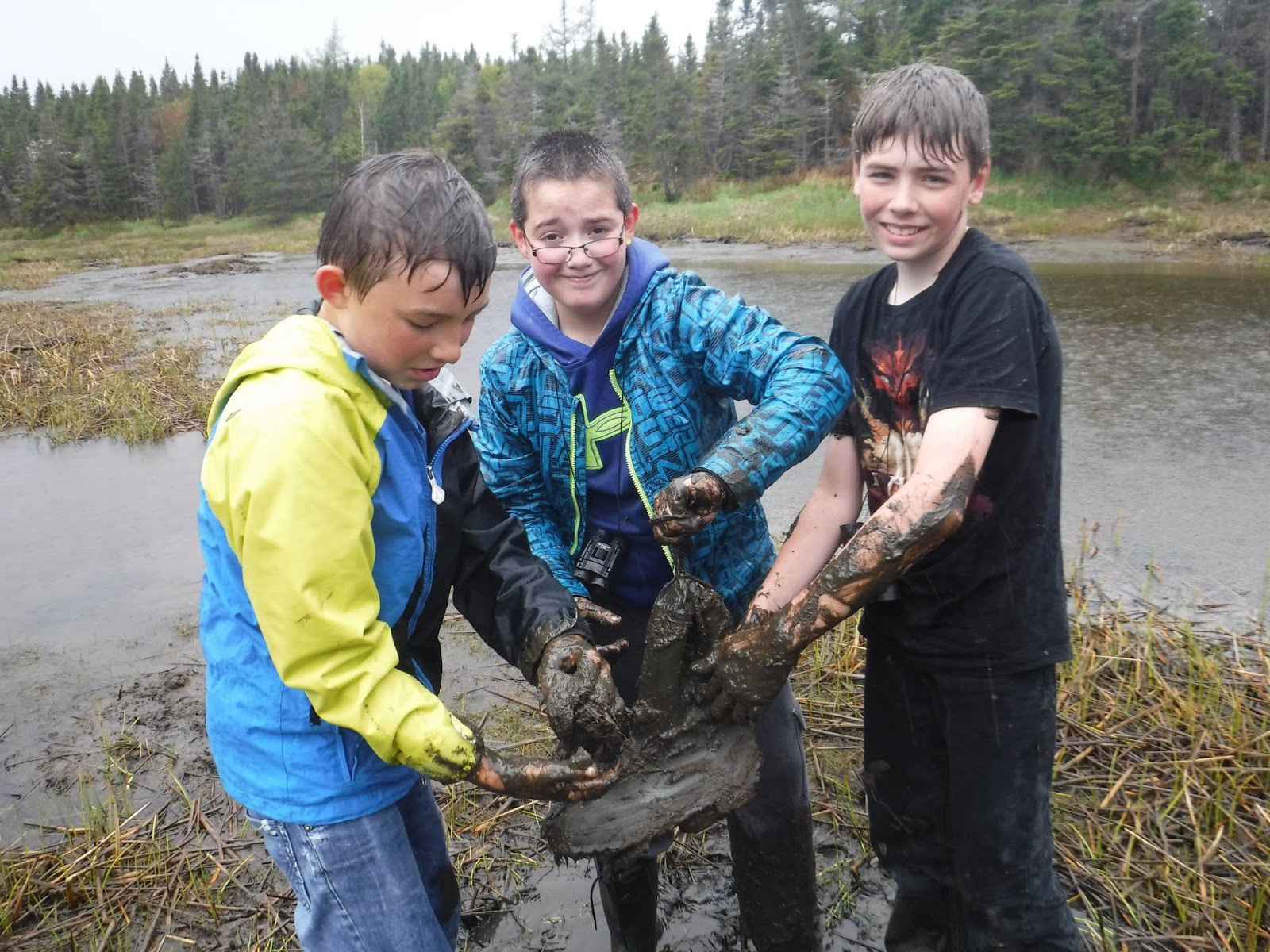
A little rain didn't deter these grade 4 students from having a
great field trip in Winterland!
Ducks Unlimited Canada is a valued partner of SAM. DUC works to conserve, restore and manage wetlands as well as the wildlife found within. An especially popular initiative of DUC is their Project Webfoot program. Project Webfoot creates the opportunity for grades 4-6 students across Canada to learn and connect with nature through curriculum-linked, interactive field trips in and around wetlands, as well as supplying in class and on-line resources for educators and students.


Grade 4 students from French Shore Academy learn about cavity
nesting tree ducks before going birdwatching at the Torrent River
Interpretation Centre in Hawke's Bay.
Delivery of these field trips for the 2015-2016 school year wrapped up in late June. Along with DUC NL staff, field trips are provided by three delivery partners: Corduroy Brook Enhancement Association in Grand Falls - Windsor, the Suncor Energy Fluvarium in St. John's and the Indian Bay Ecosystem Corporation on the Bonavista North peninsula. In September, Healthy Waters Labrador in Happy Valley - Goose Bay will become the fourth delivery partner in the province. This spring, DUC NL staff traveled to several SAM member municipalities to deliver Project Webfoot field trips: Winterland, Springdale, Hawke's Bay and Stephenville Crossing. 


Students dip for critters in Stephenville Crossing.
Some activities a class might expect on a Project Webfoot field trip include critter dipping in marshes and ponds for macro invertebrates, birdwatching around the area, and multiple fun games that focus on the values of our wetlands. This year, an effort was made to focus the material and the messaging on the boreal forest and peatlands of Newfoundland and Labrador. At the end of the field trip students go home with informative Marsh World books. Costs of in-class and field trip resources are supplied generously through corporate and individual sponsorships.


The Indian River Trail, Springdale.

Monday, 4 July 2016

Carmanville Habitat Committee Beach Clean-Up

Beach Clean-Up and Carmanville Habitat Committee volunteers.

On Saturday, June 4, 2016, the Carmanville Habitat Committee(CHC) sponsored its first beach cleanup, in recognition of World OceansDay.  This day is celebrated annually, on June 8th.  The idea is to create awareness of ocean pollution.  This year's theme was "Healthy Oceans, Healthy Planet" with the focus on reducing plastic pollution, which harms many aquatic species.  More than a dozen volunteers, including several committee members and the mayor, Keith Howell, met at the government wharf Saturday morning.

Volunteers spent three hours picking up garbage and debris along the north side of Carmanville Harbour.  In this short time period, over 60 bags of garbage were collected, along with numerous larger items such as chairs, artificial Christmas trees, TV's, etc. 

Some of the garbage removed from the beach,
The Carmanville Harbour Authority provided refreshments to the volunteers following the cleanup.  In addition, DFO supplied the CHC with work gloves, reusable shopping bags, back packs and pencils to distribute to the volunteers in appreciation for their efforts.

The CHC would like to thank all those who volunteered in any way to make this beach cleanup a success.  We look forward to sponsoring additional beach cleanups in the future. By keeping our beaches free of plastics and other debris, we can ensure a healthier ocean and a healthier planet.

Thursday, 30 June 2016

SAM Annual General Meeting in the Codroy Valley


SAM held its Annual General Meeting this year in the Codroy Valley on June 17-18. We would like to thank our hosts, the residents of the Codroy Valley for being so welcoming, and Kathleen Blanchard and her staff at Intervale Associates for arranging the logistics of the weekend.

On Friday evening, participants were treated to a delicious buffet supper and had the opportunity to meet several local residents. SAM President Linda Bailet was the MC for the night, and introduced Claudelle Devoe, Chair of the Codroy Valley Area Development Association and Local MHA Scott Reid, who both gave welcoming remarks. Local resident Derek White gave a very informative presentation on the natural, social and geological history of the region, and the event was topped off by some lively traditional music from local musicians.


View of the Grand Codroy Estuary.
At the business meeting on Saturday, delegates from 18 member municipalities reported on their town's latest stewardship and conservation initiatives. It has been another busy year for our members, with many clean-ups, trail developments, community gardens, interpretive centers and more on the go. A major topic of discussion during the meeting was the development of a provincial wetland policy, and the historic and future role of SAM in fulfilling this goal. SAM supports the development of a wetland policy, because it is an important step in safeguarding significant wetland habitat, and could provide a framework for future restoration opportunities.

SAM Members search for the Great Blue Heron.
After the meeting SAM members were treated to a tour of the Grand Codroy Estuary, which is Newfoundland and Labrador's only Ramsar Wetland of International Significance. Participants were able to view the provincially rare Great Blue Heron and the endangered Piping Plover - and even four plover chicks! The field trip was followed by dinner and more live music at the Silver Sands Restaurant and Lounge. Thank you again to our hosts for all of their hard work, and thank you to the delegates who attended!
SAM Members view the endangered Piping Plover on the beach.

Save the date for the next SAM meeting: it will be held in Happy Valley - Goose Bay on September 23-24, 2016. See you there!

Wednesday, 27 April 2016

Upcoming Stewardship Workshop: Working Together for Birds, Wetlands, and Community in the Codroy Valley

There is a long history of conservation and stewardship in the Codroy Valley. This stewardship workshop will draw on ideas brought forth at two previous workshops, and will continue to plan future actions in the area. Details of the event are included in the poster below.